

Do you want to learn more about writing, including receiving marketing tips and tricks, deals on valuable workshops and retreats, and time management hacks? Join the VIP Writer’s Club!
Become a VIP Reader!Interested in free books, exclusive bonus content, and VIP early access to Jess’ upcoming projects? Then sign up here to become a VIP Reader.
March 30, 2016
How to Write Funny, Part I (A Writing Whip-It)
I am a crap at telling jokes face-to-face. My timing is off, I rush the punch line, and I laugh out of turn. I possess only two good go-to jokes, one for kids and one for adults (cover your eyes on the second one):

Rated R
What's the last thing you want to hear when you're giving Willie Nelson a blowjob?
(yep--already laughing)
"Um, I'm not Willie Nelson."
(Still laughing.)
Oral joke telling is a hard art, and I admire those who can do it. I have zero skill in that area. Writing funny, though? That's my jam. I write magical realism, YA adventure, and nail-biting thrillers, and they all transport me, but when I'm writing funny? My wings are strapped on and I'm FLYING. While walking my goofy dog Juni this morning (and to whoever let their fiber-eating brontasaurus poop outside my front gate, karma doesn't forget), I realized that I hadn't written funny in over a year. That explained why I'd been feeling unbalanced, carrying a low-level anxiety like maybe I'd forgot my keys somewhere. I immediately began outlining Maniac Monday, a Murder-by-Month novella. Stress I'd been carrying for weeks began to melt off. Or, at least it didn't get so much space on my shoulders.
If maybe writing funny can work its magic on you like it does me, balancing the heavy with its light, I'm going to share the methods I use. In the spirit of keeping these Writing Whip-Its short (you're busy, man), I'm splitting this into a ten-part series. Today is an overview of Writing Funniness, the next eight installments are the tools of writing funny, and the tenth post will show you how to bring it all together in your own writing. 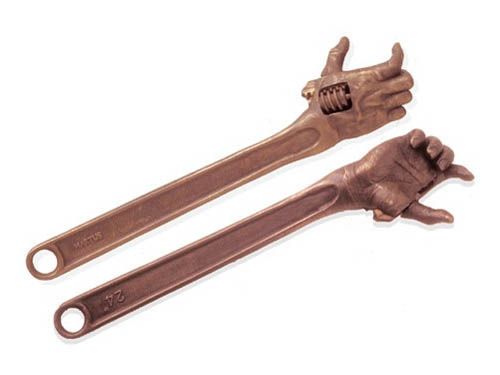
Writing Funniness Overview
Because my Murder-by-Month Mysteries are funny (five-time Lefty-nominated for best humorous mystery), every conference I go to, I'm put on the Writing Funny panel. I love it because I know I'm going to laugh. A lot. But the same question comes up from the audience every time: "I'm not a good joke teller, and nobody really thinks I'm funny. Can I write funny?"
Yep. And you should. My friend, screenwriter, novelist, and the fricking funniest story teller you'll ever meet, Johnny Shaw, tells a story of one of his screenwriting professors reading an early draft of Johnny's work, nodding approvingly, and saying, "Funny is money." It is. Funny sells. Besides being lucrative, laughter makes the world a better place. It just feels good to make someone laugh. And the beauty of writing funny, unlike being live-action funny, is that you have time to perfect and revise it. So yeah. You can write funny.
The second question that comes up on these panels: "Different things are funny to different people. How do you make something funny for everyone?"
You don't. You tickle yourself, and I guarantee you'll tickle others. They might be weirdos like you or me, but the weirdos (especially the weirdos) need to laugh, too. There is an audience for your humor. Over the next eight installments, we'll figure out what humor tool(s) fit best in your hands so you can refine your funny voice and subsequently find your people. If you're not interested in writing funny, you're welcome to hang out here anyways. I promise laughs.
...................................................................................................................................................................................................
Jessica (Jess) Lourey is best known for her critically-acclaimed Murder-by-Month mysteries, which have earned multiple starred reviews from Library Journal and Booklist, the latter calling her writing "a splendid mix of humor and suspense." She is a tenured professor of creative writing and sociology, a recipient of The Loft's 2014 Excellence in Teaching fellowship, and leads interactive writing workshops (including "Writing Funny") all over the world. <i>Salem’s Cipher</i>, the first in her thrilling Witch Hunt Series, hits stores September 2016 and her agent is currently shopping Better than Gin: Rewrite Your Life, a guide to transforming life experiences into compelling fiction.
Share it

March 28, 2016
Advice I Never Write Without (A Writing Whip-It)
It takes a village to raise a writer.
I don’t just mean the nerdy English teachers who infected us with their love of language, or the librarians who provided us our early book fixes, or even the editors who so artfully disguise the moles, mustaches, and pockmarks in our manuscripts. There’s also the other writers who’ve generously shared their own tricks. I’m passing on the two best pieces of writing advice I’ve ever heard, one from Carolyn Hart and the other from Elizabeth Gilbert. 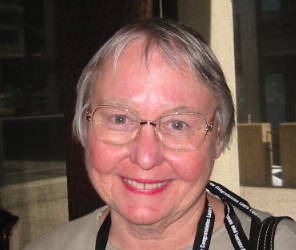
Carolyn Hart was speaking on a Malice Domestic panel in 2007. She was at the conference to accept the Lifetime Achievement Award, and over 200 fans packed the room. During the Q & A portion of the panel, one aspiring writer timidly raised her hand and asked Ms. Hart whether she should hold off on using all of her good ideas in her first novel because then what would she have left for her second one?
After some polite laughter in the room (which I didn’t understand until later—the question seemed excellent), Ms. Hart said, “Use your good ideas now. Your brain will make more. I promise.” Maya Angelou concurs in her famous quote: “You can't use up creativity. The more you use, the more you have.” 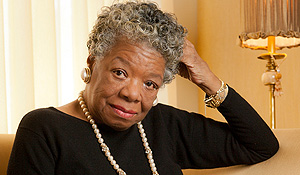
Don’t hold back when you write.
The second piece of advice came from Elizabeth Gilbert, who was speaking at a retreat I attended in the spring of 2015. A young author asked Ms. Gilbert how she knew which ideas to use when writing Eat, Pray, Love and which to leave out. The question wasn’t so much about using up all your good stuff as it was about being overwhelmed with potential directions and not knowing how to select what helped the story and what hurt it. 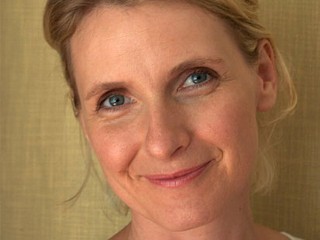
“That’s easy,” Ms. Gilbert said. “Every book I write, I write to one person. It doesn’t have to be someone close to me, and they don’t ever have to know.”
The idea struck me as both simple and revolutionary: which one person am I writing this book for? Who most needs to read it? What parts of the story must they know? What won’t matter to them? What tone must I strike? By selecting a one-person audience and writing to that person from the brainstorming stage to final edits, you will instinctively know what to include in your novel and what to leave out.
Share it
March 25, 2016
Transitions, Rebirth, and a TEDx Talk
This past Sunday marked the vernal equinox, that time when day and night are equal, green buds tremble with potential, and the robins return to sing in Minnesota. This week is symbolic to many spiritual and religious traditions--Pagan, ancient Mayan, modern Christian--a period of potential resurrection after a winter of dormancy. In a very real way, I find myself right now living this process of transition and rebirth: struggling to find balance, choosing hope (light) over worry (dark), and shrugging off the itchy skin of a previous life. Specifically:
- I'm uprooting my kids and moving us all to Minneapolis. My house sold in three days--too soon! we have nowhere to live--and then yesterday the buyer changed his mind--whut??? how can we move if our house doesn't sell?
- My fiance and I will be moving in together in Minneapolis. I've been a single parent for 17 years. I am CRAP at compromising. He is great at bringing playfulness into my overbooked life...
- We're moving from a small, conservative city to a big one. All good, but still...transition.
- My 17 yo is moving to Chicago to start college this coming fall. She is brilliant, feisty, funny and will thrive. But she's my baby...
- I've completed the closest thing to a memoir that I've ever written, an intimate, instructional, how-to-transform-life-experience-into-a-powerful-novel guide that rips the lid off of treasures, pain, and fear that I've been sneaking water to for decades. My agent began to shop it around yesterday.
- In the most unbelievable news of all, my proposal to deliver a TEDx Talk on my experience transforming fact into fiction in the wake of my husband's 9/11 suicide has been accepted. I walk onto that big stage on June 22. Me, who was raised to be intensely private, will stand emotionally naked before the world. I am profoundly honored, and even more profoundly positive that when the time comes, I will step in front of the cameras and bleat like a sheep before my bowels relax. But I'm going to do it because turning fact into fiction is a magical process, both for personal healing and for crafting incredible novels, and I don't get to keep that gift to myself because I'm scared.
Here's what I am learning: you can grip the familiar so tightly that your fingers bleed, as I do more often than I'd like, or you can let go, slap a smile on your face, and enjoy the log ride, coming out at someplace wonderful beyond your wildest imaginings. The butterfly is the symbol for this transformative process, and there are a ton of aphorisms about how wonderful this personal metamorphosis is, but you know what? If you stuck a tiny microphone up to that little green caterpillar's leaf-chewing mouth and asked him if he wanted to be a butterfly, he'd say, "Pass. Hard pass."
Because you know what? Moving into the unknown--house, next level of a relationship, new style of writing, a TEDx Talk, whatever you're dealing with right now--is terrifying.
The only thing that keeps me going is that NOT evolving is even more frightening. Really. In case I doubted that, I received a call this morning letting me know that a coworker, the best teacher I've ever met and a woman my own age, is having emergency surgery and will not be back this semester. I’m sending her and her family a heart full of love, and I am reminded of how we must live large, each day, stretching, pushing, falling down in spectacularly embarrassing ways, rising, laughing as we dust each other off, and stretching some more. Because the only safe bet in life is what you decide to do with this moment.
So please, if you can find it in your soul to join me in this feels-like-bullshit-but-probably-looks-good-from-the-outside spring metamorphosis, even one small way you can step out of your comfort zone with me, post it below. It's easier to leave this cocoon if I'm not alone.

Share it

Jess Lourey is the bestselling author of over 30 novels, articles, and short stories.

Explore
Jess Lourey’s Books >Recent Posts
The Truth in Fiction
Reading Like a Writer (A Writing Whip-it)
Transitions, Rebirth, and a TEDx Talk
Advice I Never Write Without (A Writing Whip-It)
How to Write Funny, Part I (A Writing Whip-It)
Interested in free books, exclusive bonus content, and VIP early access to Jess’ upcoming projects? Then sign up here to become a VIP Reader. You’ll immediately receive a free copy of May Day, the first in the Mira James comic caper mysteries, just for signing up!
Do you want to learn more about writing, including receiving marketing tips and tricks, deals on valuable workshops and retreats, and time management hacks? Join the VIP Writer’s Club! You’ll receive free VIP access to an online novel-writing course just for signing up and can unsubscribe from the newsletter at any time.
Latest Release
Two murder investigations, decades apart, threaten to expose a cold case agent Van Reed’s darkest secrets in this pulse-pounding third book in the Edgar Award–nominated series.